
Last Updated: October 26, 2026
Quick Summary
If you see a coyote with your dog, stay calm, shorten your leash, and step between your dog and the coyote without running. Get loud and big if it approaches, and back away toward a lit area or door while keeping your dog quiet and close.
- A coyote that freezes and stares is usually curious or guarding food.
- Running triggers the chase instinct in almost every predator, so never run.
- Lift a small dog only if the coyote is still several steps away.
- If a coyote grabs your dog, make it let go instead of pulling your dog away.
- Report any coyote that approached, followed, or attacked to local animal control.
Table of Contents
- Stay Calm and Assess the Coyote's Behavior
- What to Do If a Coyote Approaches Your Dog
- Make Yourself Look Large and Make Noise to Scare It Away
- What to Do If a Coyote Attacks Your Dog
- How to Prevent Coyote Attacks on Dogs
- Coyote Deterrents for Dog Walks
- After an Encounter: Veterinary Care and Reporting
- Protect Your Small Dog Before the Next Walk
- Frequently Asked Questions
Stay Calm and Assess the Coyote's Behavior
Knowing what to do if you see a coyote with your dog starts with one move: stop and read the animal. A coyote that freezes, stares, and holds its ground is usually curious or guarding food.
Your first job is to get your dog's attention and keep it quiet. A barking, lunging dog turns a nervous coyote into an aggressive one. Watch the ears and tail:
- Ears up, tail high: curious, often just passing through
- Ears back, tail tucked: fearful, may bolt or bite
- Head low, ears forward, tail straight out: stalking, treat this as a threat
Do not run. Running triggers the chase instinct in almost every predator. Instead, shorten your leash and step between your dog and the coyote.
What to Do If a Coyote Approaches Your Dog
A coyote that closes the gap is making a decision, and your response should match what it is actually doing. Use this behavior-based decision tree instead of guessing:
- Passing through: The coyote is moving on a line that does not point at you, ears up, tail relaxed. Shorten the leash, step between your dog and the coyote, and keep walking. No noise needed.
- Approaching: The coyote slows, turns toward you, or cuts the distance. Stop, face it, and get loud and big (see the next section). Do not turn your back.
- Following: The coyote trails you at a distance, often stopping when you stop. Keep your dog at your side, back away toward a lit area or a door, and keep watching over your shoulder. Do not run.
Keep Your Dog Close and Under Control
Reel in the leash until your dog is at your side, not out front. A retractable leash is a liability here, so lock it short or switch to a standard 4-6 foot leash. If your dog is off-leash, call it once in a firm voice and grab its collar the moment it reaches you. Do not chase a dog that panics and runs; call it and move toward it slowly.
Pick Up a Small Dog When It Is Safe
Lift a small dog into your arms only if the coyote is still several steps away. Scooping up a dog can trigger a lunge if the coyote is already close, so judge the distance first. Once your dog is up, hold it tight against your chest and keep facing the coyote. For owners of Chihuahuas, Yorkies, and other tiny breeds, this is often the single most important move in the whole encounter.
Adjust for Your Dog's Size, Temperament, and Leash Status
- Small dogs (under about 15 pounds): Lifting is often the fastest way to remove the trigger. Practice a calm pickup at home so it is not a scramble in the moment.
- Large dogs: Do not lift. Keep the leash short, stand between the dog and the coyote, and use your voice and a stick to hold distance. A large dog can still be injured, so do not let it engage.
- Reactive dogs: A dog that screams or lunges can pull a coyote in. Create distance first, then redirect with a treat or a familiar command. A front-clip harness gives you more control than a collar alone.
If the coyote keeps its distance, walk away calmly and keep watching over your shoulder. Most encounters end here, with no contact at all.
Match your response to what the coyote is actually doing.
| Coyote behavior | What to do |
|---|---|
| Passing through | Shorten leash, step between dog and coyote, keep walking |
| Approaching | Stop, face it, get loud and big, do not turn your back |
| Following | Back away toward a lit area or door, keep watching |
| Acting aggressively | Body between coyote and dog, make noise, use stick or bag |
Make Yourself Look Large and Make Noise to Scare It Away
Coyotes are wary of people, and a loud, big human is a deterrent. Stand tall, raise your arms overhead, and open your jacket wide to look bigger. Then get loud.
Use what you have on hand:
- Wave a jacket or bag above your head
- Shine a flashlight directly at the coyote's eyes
- Throw a stick or rock toward it, not at it, to startle it
Never corner a coyote or chase it into brush. A trapped animal fights. Keep backing away toward a lit area or a door, and keep making noise until the coyote turns and leaves.
What to Do If a Coyote Attacks Your Dog
An attack is rare, but it can happen in seconds. If a coyote grabs your dog, do not try to pull your dog from its mouth; that causes tearing wounds.
Once you are clear, check your dog head to tail for puncture wounds, especially on the neck, back, and legs. Bite wounds can look small on the surface and hide serious damage underneath.
How to Prevent Coyote Attacks on Dogs
Prevention comes down to supervision, a secure yard, and a layer of physical protection. Coyotes rarely take a dog that stays close to a person. They look for unattended pets, especially at night. If you have questions about sizing or how our gear works, our FAQs cover the details.
Supervise Outdoor Time and Secure Your Yard
Walk your dog on a short leash, and stay outside with it after dark. Never leave a small dog alone in a fenced yard, because coyotes can clear fences and dig under them. Check your fence line for gaps and add motion lights around the perimeter. Keep trash sealed and pick up fallen fruit, since both draw the rodents that coyotes hunt.
Add a Layer of Protection for Small Dogs
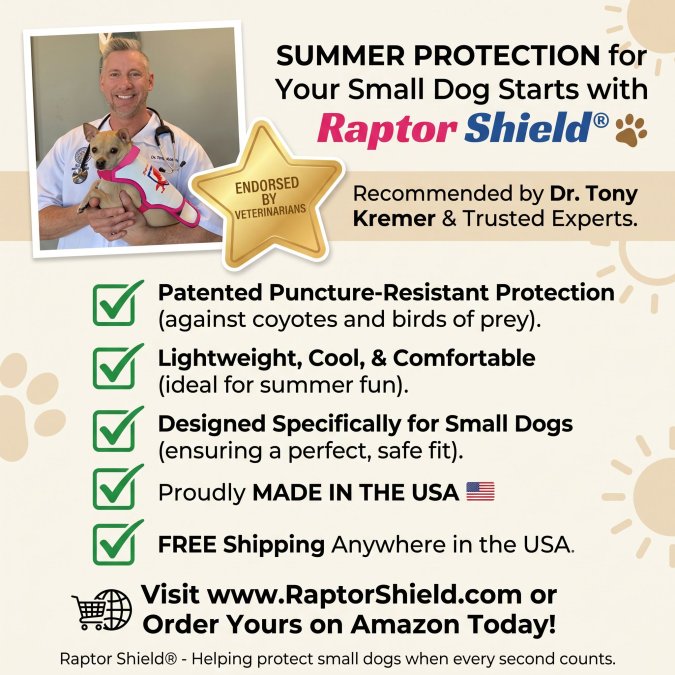
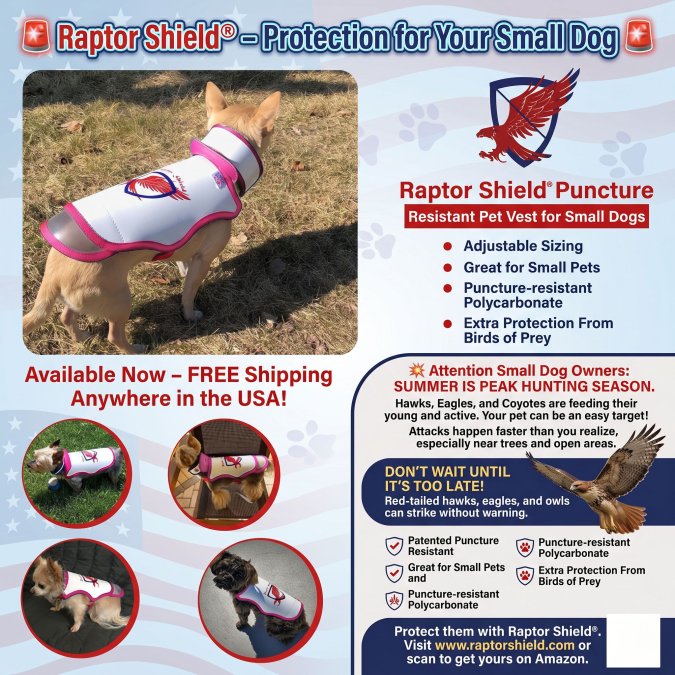
No gear can guarantee safety against a predator, but the right layer can buy precious seconds. Raptor Shield makes patented puncture-resistant vests and collars for small dogs, built from materials similar to those used in bulletproof glass. Learn more about our products. One customer's dog wore a vest during a coyote attack and came out safe and clean. Read testimonials from other dog owners.
Coyote Deterrents for Dog Walks
Carrying a few simple tools changes how a walk feels. A bright flashlight helps at dawn and dusk, when coyotes are most active. An air horn or whistle is loud enough to startle a bold coyote.
Avoid leaving food or water outside, and never feed a coyote on purpose. Fed coyotes lose their fear of people and become far more dangerous.
After an Encounter: Veterinary Care and Reporting
Even a near miss deserves a check. Use this checklist so nothing gets missed.
Veterinary Care: When to Go Now vs. Watch
- Go to an emergency clinic immediately if the coyote made contact, if you see puncture wounds, bleeding, swelling, or limping, or if your dog seems painful, lethargic, or shaky.
- Call your regular vet the same day for any contact, even if the skin looks intact. Bite wounds can look small on the surface and hide serious damage underneath.
- Watch closely for 24-48 hours after a near miss with no contact: drooling, reluctance to eat, hiding, or sensitivity to touch can signal pain or infection.
At the vet, expect the team to clean and flush wounds, check for deeper damage, and discuss rabies and other vaccines based on your dog's history and local rules. Wash any wounds with warm water and mild soap on the way if you can do so safely.
What to Record
Write down the time, location, and what the coyote did (approached, followed, lunged, made contact). Note your dog's behavior and any wounds you see, and take photos of injuries and the area. If you can do so safely, note the coyote's appearance and direction of travel. This record helps your vet and any agency that responds.
Who to Report To
- Local animal control is the first call for a coyote that approached, followed, or attacked. Reports help officials spot patterns and warn neighbors.
- Police non-emergency line if animal control is closed or the coyote is still in the area and acting boldly.
- Your state wildlife agency can point you to local guidance on coyote conflicts. The USDA Wildlife Services program also helps communities manage coyote conflicts and can direct you to local resources.
Before Your Next Walk
Take a beat before you go out again: walk in daylight when you can, keep your dog on a short leash at your side, and carry a deterrent such as a flashlight or whistle. If the encounter happened near your home, check your fence line and keep trash sealed so you do not invite a repeat visit.
Protect Your Small Dog Before the Next Walk
Coyotes are adaptable, and sightings are rising in many suburban and rural areas. The best defense is a plan you never have to think about in the moment: a short leash, a loud voice, and gear that adds a layer of protection. Raptor Shield builds patented, puncture-resistant vests and collars for small dogs, with a lightweight, spike-free fit your dog can wear on every walk.
Frequently Asked Questions
Should you pick up a small dog if you see a coyote?
Pick up a small dog only when it is safe to do so and the coyote is not already closing in. Lifting a dog can calm the situation and remove an easy target, but a sudden grab can also trigger a chase response in a nearby coyote. If the coyote is far off, leash your dog first, then lift it and back away calmly. For dogs too heavy to carry, keep them leashed and tight by your side instead.
How can you prevent coyote attacks on dogs?
Prevention comes down to supervision and control. Keep dogs leashed on walks, especially at dawn and dusk, and never let them roam a yard alone. Secure fencing, removing fallen fruit and pet food, and trimming brush that offers cover all reduce coyote interest. For small breeds, a protective vest or collar adds a layer of coverage during supervised outdoor time. No gear guarantees safety, so pair it with close supervision and keeping your dog near you.
What should you do if a coyote approaches your dog?
Do not run. Pull your dog in close on a short leash, or pick up a small dog if it is safe. Make yourself look larger by raising your arms and opening your jacket, and make loud noise by shouting, clapping, or using a whistle. Back away slowly while facing the coyote, and use a flashlight or an object like a jacket to look threatening. Once you have distance, leave the area calmly and report the encounter to local animal control.
What do you do if a coyote attacks your dog?
Intervene only with objects, never your bare hands. Use a stick, jacket, or leash to create distance, and make as much noise as possible. Once your dog is free, move to safety and check for puncture wounds, which can be hidden under fur. Call your veterinarian right away, even for minor contact, because coyotes can carry rabies and other diseases. Then report the attack to animal control or police so the incident is documented.
Coyote encounters are unpredictable, and no product can promise your dog will never be hurt. What you can control is how prepared you are. Raptor Shield gives small dog owners patented, puncture-resistant protection, a lightweight and comfortable fit, and free shipping anywhere in the USA. Get started with Raptor Shield and walk with more confidence.
