
Last Updated: October 30, 2026
Quick Summary
The best small dog protection outdoors comes from layering a puncture-resistant vest over the back and torso, a collar for the neck, and yard habits that deny predators access. Gear buys you time to intervene, but it never replaces supervision on every outdoor trip.
- Raptor Shield vests are sized by weight and chest, from 2-3 lbs up to 7-11.5 lbs.
- Measure the chest at its widest point just behind the front legs, twice, with a soft tape.
- Bring dogs in at dawn and dusk, when coyote activity peaks, and vary walking routes.
- Walk the fence line monthly and patch digging spots and gaps predators use.
- Replace the vest when the material shows punctures, deep scratches, or seam separation.
Table of Contents
- Quick Comparison: Small Dog Protection Options
- Why Small Dogs Need Layered Outdoor Protection
- How to Protect Small Dogs from Coyotes
- Choosing a Coyote Vest for Small Dogs
- Hawk Protection for Small Dogs: Talon-Proof Coverage
- Small Dog Yard Safety Beyond Equipment
- Fitting, Care, and Replacement Criteria
- Protect Your Small Dog Before the Next Close Call
- Frequently Asked Questions
Quick Comparison: Small Dog Protection Options
Finding the best small dog protection outdoors comes down to layered coverage: a puncture-resistant vest for the back and torso, a collar for the neck, and smart yard habits that reduce exposure in the first place. At Raptor Shield, we build gear around one principle: buy time. No vest can guarantee safety against a determined predator, and the right combination of coverage, fit, and supervision is what gives you time to intervene.
Here is how the options stack up before we break each one down.
| Option | Price | Protects | Best For |
|---|---|---|---|
| Raptor Shield Vest - Extra Small | $77.50 | Back and torso | Dogs 2-3 lbs |
| Raptor Shield Vest - Small | $81.50 | Back and torso | Dogs 4-6.5 lbs |
| Raptor Shield Vest - Medium | $81.50 | Back and torso | Dogs 7-11.5 lbs |
| Raptor Collar - Small | $21.50 | Neck area | Adding neck coverage |
| Raptor Collar - Medium | $24.50 | Neck area | Adding neck coverage |
| Yard fencing and secure enclosure | Varies | Denying access | Preventing encounters |
| Leash and supervision habits | No added cost | All threats | Every outdoor trip |
That is the short version. The rest of this guide explains why each layer matters, where gear helps, and where it does not.
Why Small Dogs Need Layered Outdoor Protection
Small dogs face threats from two directions at once: ground predators like coyotes and aggressive dogs, and aerial predators like hawks. A single piece of gear rarely covers both. Layered protection means combining a protective vest, neck coverage, and environment control so no single failure becomes a tragedy.
Small dogs can be more exposed to predators than larger dogs. That is the reasoning behind our layered protection approach: cover the vital areas, keep the dog close, and remove the easy opportunities predators look for.
Watch out: treating a vest as a substitute for supervision is the most common and most dangerous mistake. Gear buys time. You still have to be outside.
How to Protect Small Dogs from Coyotes
Learning how to protect small dogs from coyotes starts with denial, not defense. Coyotes are opportunistic, habit-hunting canids that key on routine: the same yard, the same dusk walk, the same unattended dog. Remove the pattern and you remove most encounters before gear is ever needed. What most guides skip is the trade-off between each layer, so here is a threat-by-threat comparison of the options that actually reduce coyote risk.
| Layer | What it does | Limits and trade-offs | Best used when |
|---|---|---|---|
| Supervision and leash | Removes the unattended window coyotes exploit | Fails the moment attention drifts; short leashes limit a dog's ability to evade | Every outdoor trip, especially dawn and dusk |
| Fencing and gap closure | Denies ground access | Coyotes dig and can clear low barriers; fencing does nothing for aerial threats | Fenced yards with monthly gap checks |
| Covered run or secure enclosure | Blocks both ground and overhead approach | Costs vary; can reduce exercise and social time if overused | Short solo outdoor time |
| Attractant removal | Shrinks the rodent and food base that draws coyotes | Requires consistency; neighbors' attractants still pull animals in | Ongoing yard habit |
| Protective vest and collar | Limits injury and buys seconds during an encounter | Cannot stop a committed coyote; adds heat and fit considerations | Supervised outdoor time in known coyote country |
Coyote behavior explains the ordering. That is why the highest-value steps are the simple ones:
- Never leave a small dog outside unattended, even in a fenced yard
- Bring dogs in at dawn and dusk, when coyote activity peaks
- Secure trash, compost, and fallen fruit that draw rodents and coyotes
- Close gaps under fences and gates; coyotes dig and can clear low barriers
- Walk on a short leash and stay alert near greenbelts and wooded edges
- Vary your walking route and time so you do not create a predictable pattern
If an encounter happens, the goal is to interrupt it fast. Make noise, appear large, and get the dog inside. A protective vest adds back and torso coverage during that window, and a Raptor Collar adds coverage around the neck, the area a coyote typically targets first.
We will be direct: a vest is not a shield that stops a committed coyote. It is a layer that limits injury and buys the seconds you need to act. That distinction is why we pair every recommendation with supervision.
Choosing a Coyote Vest for Small Dogs
A coyote vest for small dogs works only if it fits correctly. A loose vest rides up and exposes the back; a tight one restricts movement and gets refused. Fit is the whole game, and most guides stop at a size chart.
Start with two measurements: weight and chest circumference. Our sizing runs in narrow bands for a reason, because a two-pound difference changes everything on a tiny frame.
- Raptor Shield Vest - Extra Small: dogs 2-3 lbs, chest 7.5-10.5 inches, $77.50
- Raptor Shield Vest - Small: dogs 4-6.5 lbs, chest 10.5-13.5 inches, $81.50
- Medium Raptor Shield Vest: dogs 7-11.5 lbs, chest 13.5-17 inches, $81.50
How to measure a small dog for a vest
- Use a soft tailor's tape, not a rigid ruler.
- Measure the chest at its widest point, just behind the front legs, with the tape snug but not compressing fur.
- Measure twice; small dogs move, and a half-inch error matters at this scale.
- Weigh the dog on a baby scale or at the vet rather than guessing.
- Match the weight band first, then confirm the chest range still fits. When a dog falls between sizes, size up and confirm the chest range still fits.
Fit checklist
- The vest sits flat over the back and does not slide when the dog trots
- Full shoulder movement is possible; the dog can walk, sit, and lie down without restriction
- Straps are snug enough that two fingers fit under them, no more
- No rubbing at the armpits, chest, or spine after a short test walk
- The dog accepts it within a few short, rewarded sessions
Teacup and unusual body shapes
Teacup breeds, long-backed dogs, and deep-chested dogs often fall outside standard bands. For these dogs, prioritize the chest measurement over weight, test the vest indoors before an outdoor trip, and watch for the vest riding forward on deep-chested builds. A dog that refuses the vest is usually a fit problem, not a training problem.
The vests are lightweight and spike-free, so they are safe around other pets and children, and the harness-style support keeps the vest stable during running and play.
Best for: owners who want added back coverage during supervised outdoor time. Skip if: your dog is outside the listed weight or chest range; start with a size that matches the measurements instead.
Hawk Protection for Small Dogs: Talon-Proof Coverage
Hawk protection for small dogs is about covering the back and shoulders, the areas talons strike first. Raptor Shield vests use a patented puncture-resistant material similar to what goes into bulletproof glass, designed to resist sharp talons.
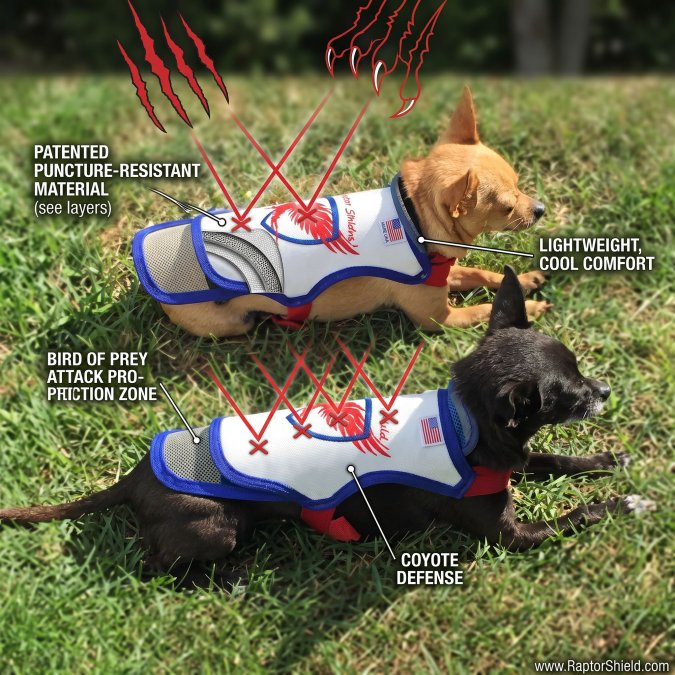
Aerial attacks can be quick, which is why prevention matters as much as gear. Avoid leaving a small dog alone in open yards, and stay close during outdoor time. The vest does not make a dog invisible to a hawk, but it adds a barrier over the back and torso.
Pairing a vest with a collar adds neck coverage alongside back and torso coverage, and both pieces are lightweight.
Small Dog Yard Safety Beyond Equipment
Small dog yard safety comes down to three habits: deny access, reduce attractants, and supervise. Fencing stops ground predators but rarely stops a hawk, so pair a secure enclosure with overhead awareness and a dog that stays close.
- Walk the fence line monthly and patch digging spots and gaps
- Add a secure enclosure or covered run for solo outdoor time
- Remove brush piles, tall grass, and food sources that attract wildlife
- Keep dogs leashed near wooded edges and open fields
- Supervise every outdoor trip, even in a fenced yard
None of this replaces gear, and gear does not replace this. The two work together: the yard reduces how often a dog meets a predator, and the vest limits damage when one gets through.
Fitting, Care, and Replacement Criteria
Fit and upkeep decide whether a protective vest actually protects. Check the fit weekly: the vest should sit flat over the back, allow full shoulder movement, and stay put when the dog trots. If it shifts or rubs, adjust or resize before the next outing.
Care is simple. Rinse and wipe the vest after muddy or wet outings, check straps and seams for wear, and store it dry. Replace the vest when the material shows punctures, deep scratches, or separation at the seams, or when your dog outgrows the size band.
If you have questions about sizing, fit, or when to replace, our FAQs cover the details owners ask about most before ordering.
Protect Your Small Dog Before the Next Close Call
The gap between a safe dog and a tragedy is often seconds. Layered protection closes that gap: a puncture-resistant vest over the back and torso, neck coverage, and yard habits that keep predators from getting a clean approach. None of it is a guarantee, and we will not pretend otherwise. It is time, and time is what lets you intervene.
Raptor Shield builds patented puncture-resistant vests and collars for small dogs, made with talon-resistant material, lightweight, and spike-free for safety around kids and other pets. Free shipping is available anywhere in the USA. Buy two or more vests and get $10 off.
Get started with Raptor Shield and give your small dog the coverage that buys you those critical seconds. Visit www.RaptorShield.com, order on Amazon, or buy now with our secure checkout: https://www.paypal.com/ncp/payment/S4N7YYEXH8Q8C
Frequently Asked Questions
How can I protect my small dog from coyotes outdoors?
Use layered small dog protection: keep your dog leashed or supervised in the yard, install a tall fence with no gaps, remove attractants like fallen fruit and open trash, and add a protective vest for back and neck coverage. A coyote vest for small dogs adds a physical barrier that may buy time during an encounter. No gear guarantees safety, so supervision and secure fencing remain the foundation of any coyote defense plan.
How do I protect a small dog from hawks and other birds of prey?
Hawk protection for small dogs starts with supervision and overhead awareness. Stay close during outdoor time, avoid leaving your dog alone in open yards, and consider a lightweight vest that covers the back and neck. Birds of prey typically strike from above, so back coverage matters most. Trim low tree branches where hawks perch, and keep your dog near covered areas or a patio roof when possible.
Are coyote vests effective for small dogs?
A coyote vest for small dogs can add a layer of puncture-resistant coverage, but it is not a guarantee against an attack. The vest may reduce injury risk and provide extra seconds for you to intervene. Effectiveness depends on proper fit, full back and neck coverage, and consistent supervision. Treat the vest as one part of a broader small dog yard safety plan that includes fencing, leash control, and quick recall training.
What features should I look for in a predator-protection vest?
Look for lightweight construction and coverage over the back and vital neck area. A spike-free design keeps the vest safe around children and other pets. Check sizing by weight and chest measurement before ordering, and confirm the vest allows full mobility for running and playing. Pair the vest with a protective collar for neck coverage, and inspect seams and materials regularly for wear.
Don't wait for the close call. Protect your small dog with patented puncture-resistant protection built for razor-sharp talons and the predators that carry them. Raptor Shield® is made in the USA and designed to help protect small dogs when every second counts.
