
Last Updated: November 1, 2026
Quick Summary
Dog vests do not stop a coyote attack, but they can add a barrier over the back and neck and give you time to reach your dog. No vest makes a small dog attack-proof, so use one as a layer to protect dogs from coyotes alongside supervision and leash use.
- A coyote typically targets a small dog's back, neck, or flank, which is where a protective vest sits.
- A vest cannot protect the legs, belly, or face, which most designs leave exposed.
- A vest only helps while you are close enough to intervene, not when the dog is alone.
- Supervise outdoor time, especially at dawn and dusk, and keep dogs leashed in known coyote areas.
- A coyote-proof fence should be at least 6 feet tall with buried mesh at least 12 inches underground.
Table of Contents
- Do Dog Vests Protect Against Coyotes? What You Need to Know
- Do Spiked Dog Vests Work? A Look at the Evidence
- Choosing a Coyote Vest for Small Dogs: Fit and Features
- How to Protect Dogs From Coyotes Beyond the Vest
- Building a Coyote-Proof Fence for Dogs
- Real-World Experiences and Testimonials
- Protect Your Small Dog With the Right Gear
- Frequently Asked Questions
Do Dog Vests Protect Against Coyotes? What You Need to Know
Dog vests do not stop a coyote attack, but they can add a barrier over the back and neck and give you time to reach your dog. No vest makes a small dog attack-proof. Below, we explain how these vests work, where they fall short, and how to protect dogs from coyotes with layered defense.
A coyote is a fast, determined predator. Most attacks target the back and neck of a small dog. That is exactly where a protective vest sits.
The Humane Society guidance on coyote conflicts stresses that supervision and habitat control matter as much as any device. Gear is one layer. It is never the whole plan.
How Protective Vests Are Designed to Deter Bites
A protective vest is a fitted harness designed to cover a dog's back and upper body with a puncture-resistant layer.
Do Spiked Dog Vests Work? A Look at the Evidence
No vest can guarantee protection against a coyote attack. Treat any protective gear as one layer of defense, not a guarantee.
What a Vest Can and Cannot Do During an Attack
A coyote typically targets the back, neck, or flank of a small dog. A puncture-resistant panel over those areas does three things:
- Increases bite depth resistance. Hard plastic or stab-resistant fabric forces the coyote to bite harder or adjust its grip, which costs time.
- Makes the dog harder to carry off. A rigid or semi-rigid back panel gives the coyote less purchase to lift and shake.
- Adds a deterrence layer. Spikes or whiskers can cause discomfort or surprise, prompting a release or hesitation.
What a vest cannot do is protect the legs, belly, or face, which most designs leave exposed. A determined coyote may still knock a small dog down, target an exposed limb, or persist through the deterrent. And a vest does nothing if the dog is alone in the yard; it only helps while you are close enough to intervene.
How to Read Manufacturer Claims and Owner Testimonials
When you see a claim that a vest "stopped a coyote," ask what actually happened. Did the coyote bite the vest and release? Did the owner intervene? Was the dog injured elsewhere? A useful testimonial describes the attack angle, the dog's size, and the outcome. Vague claims of "saved my dog" are encouraging but not evidence of consistent protection.
Claims that a vest makes a dog "coyote-proof" should be treated with caution.
The Bottom Line on Spiked Vests
Protective vests are a reasonable layer of defense for small dogs in coyote country, especially when combined with supervision and leash use. They are not a guarantee and do not replace a complete safety plan.
Choosing a Coyote Vest for Small Dogs: Fit and Features
Fit matters more than any single feature. A loose vest slides out of position. A tight one rubs and stresses the dog. Measure your dog's chest and weight before you buy.
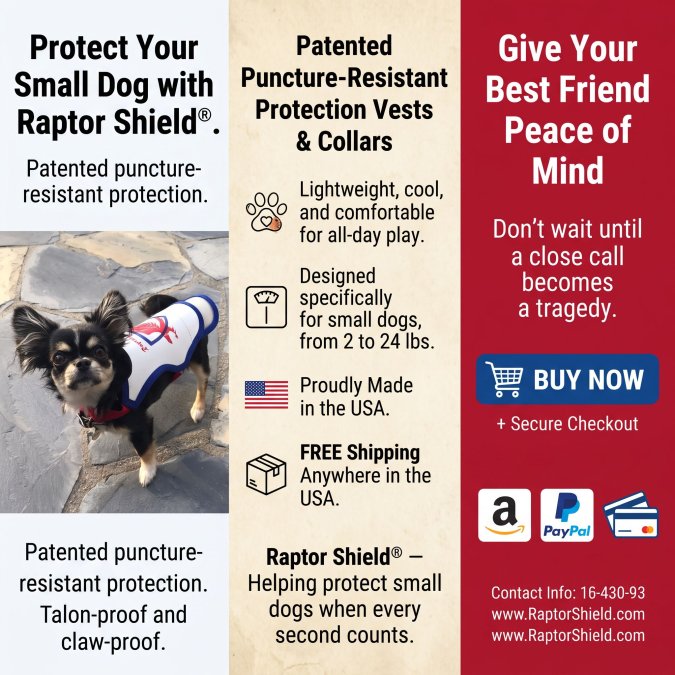
Look for these features in a coyote vest for small dogs:
- Lightweight construction for mobility and comfort
- Harness-style support for comfort and stability
- Spike-free design
- A snug fit that still lets the dog move freely
Our Raptor Shield vests use a patented, puncture-resistant design with no spikes, so they are safe around other pets and children.
Sizing and Acclimation for Tiny Breeds
Tiny breeds need precise sizing. A 2-pound dog and a 20-pound dog wear very different gear. Check the weight range and chest measurement for each size.
| Size | Dog Weight | Chest Measurement |
|---|---|---|
| Extra Small | 2-3 lb | 7.5-10.5 in |
| Small | 4-6.5 lb | 10.5-13.5 in |
| Medium | 7-11.5 lb | 13.5-17 in |
| Large | 12-21 lb | 17.5-23 in |
For a 4-6.5 lb dog, the small vest fits a chest of 10.5-13.5 inches. For a 2-3 lb dog, the extra-small vest covers a 7.5-10.5 inch chest.
Acclimation takes patience. Put the vest on for short bursts at first, then reward the dog. A nervous dog does better with slow, calm introductions than a rushed first wear.
How to Protect Dogs From Coyotes Beyond the Vest
A vest is one layer of a bigger plan. The best protection combines gear, supervision, and smart habits. Here is how to protect dogs from coyotes with a full approach.
- Supervise outdoor time, especially at dawn and dusk.
- Keep dogs leashed on walks in known coyote areas.
- Never leave food or fallen fruit that draws predators in.
- Use bright lights and noise to scare coyotes off.
- Stay close enough to intervene fast.
Letting a small dog out alone at night is a risky practice in coyote country.
Building a Coyote-Proof Fence for Dogs
No fence is truly coyote-proof, but a well-built one raises the odds and buys time. Coyotes climb and dig, so a standard fence is not enough on its own. The goal is to make your yard a less attractive target and to slow a predator down long enough for you to act.
A stronger coyote-proof fence for dogs includes:
- Height of at least 6 feet to discourage climbing, with an angled top or roll bar to prevent a coyote from getting purchase.
- Buried mesh or a footer extending at least 12 inches underground and outward to block digging.
- No gaps at gates or corners, and self-closing latches that stay secure.
- Smooth, rigid materials such as welded wire or heavy-duty mesh rather than flexible chain link that can be pushed or climbed.
Pair the fence with motion-activated lights and regular checks for dig holes or loose panels. A fence slows a predator down. It does not replace supervision, and it does not protect a dog that is left outside alone.
Integrating the Fence With Supervision and Response
A fence is one layer of a complete plan. The most effective setup combines a secure fence with close supervision, leash use on walks, and a clear response if a coyote appears. Keep dogs leashed in known coyote areas, especially at dawn and dusk. Remove attractants such as pet food, fallen fruit, and bird feeders that draw coyotes in. If you see a coyote, make noise, appear large, and retreat calmly with your dog on leash.
A fence and a vest can work together as layers of defense for a small dog. Neither is sufficient alone.
Real-World Experiences and Testimonials
One dog wore a Raptor Shield vest during a coyote attack and came out of it safe and clean.
Owners often ask whether a vest stresses an anxious dog, and whether it will stop a determined coyote. Read Testimonials to see other owners' real experiences with the vest. The honest answer is that no vest guarantees that, but protective gear can buy time for you to act.
Protect Your Small Dog With the Right Gear
Coyote attacks on small dogs are a real risk in many neighborhoods. Raptor Shield builds patented, puncture-resistant vests that add a layer of defense and give you time to reach your dog. Our vests are lightweight and spike-free, with free shipping anywhere in the USA. Get started with Raptor Shield and give your small dog protection when every second counts.
Frequently Asked Questions
Can a dog vest stop a coyote attack?
No vest can guarantee safety against a determined coyote, but a protective vest can reduce the risk of serious injury by covering vital areas with puncture-resistant material. The goal is to buy time for you to intervene or for your dog to escape. Always supervise your dog outdoors, even when wearing protection, because predators are unpredictable and no gear replaces close attention.
Are coyote vests safe and comfortable for small dogs?
Yes, when properly fitted. Look for lightweight, spike-free designs that allow freedom of movement. Introduce the vest gradually with treats and short sessions so your dog adjusts. Check straps for rubbing and ensure the vest doesn't restrict breathing or range of motion. A well-fitted vest should stay secure without being tight, and most dogs acclimate within a few days.
Is a coyote vest a substitute for a leash or secure fence?
No. A vest is one layer of defense, not a replacement for supervision, a leash, or a secure fence. Use the vest alongside other measures like a secure fence, eliminating attractants, and keeping your dog close during peak coyote activity (dawn and dusk). Defense in depth is the most reliable way to reduce risk.
What should you do if you see a coyote while walking your dog?
Stay calm and keep your dog close on a short leash. Do not run, as that can trigger a chase. Make yourself look large, wave your arms, and make loud noises to scare the coyote away. Back away slowly while facing the coyote. Carry a deterrent like a whistle or air horn. Report aggressive coyotes to local wildlife authorities and avoid that route until the situation is addressed.
Don't wait for the close call. Protect your small dog with gear built to help. Visit www.RaptorShield.com, order on Amazon, or buy now with our secure checkout.
