
Table of Contents
- Can Dogs Wear Protective Vests in Rain?
- Understanding Waterproof Dog Vests vs. Rain Jackets
- Dog Vest Fit and Comfort in Wet Weather
- Moisture and Skin Health: Protecting Your Dog
- Cleaning and Drying a Dog Vest After Rain
- When to Wear a Protective Vest in Wet Weather
- Protect Your Small Dog
- Frequently Asked Questions
Last Updated: October 16, 2026
Can Dogs Wear Protective Vests in Rain?
Yes, dogs can wear protective vests in rain. The real question is whether they should, and how to do it safely.
The challenge: a vest built to shield your dog from predators also traps moisture against the skin. Four things matter: fit, material, timing, and aftercare.
Understanding Waterproof Dog Vests vs. Rain Jackets
A protective vest and a rain jacket solve two different problems, and the gap matters most in rain. A rain jacket sheds water; a protective vest stops punctures from talons, teeth, and claws. Those goals pull design in opposite directions: shedding water favors thin, breathable, loosely draped fabric, while puncture resistance favors dense, laminated material held close to the body.
What "Waterproof" Actually Means on a Dog Garment
Water resistance is a spectrum, and the terms aren't interchangeable:
- Water-repellent fabric beads light rain, but the coating wears off and the fabric can soak through under sustained rain or pressure.
- Waterproof fabric blocks liquid water but needs sealed seams to stop wicking through stitching.
- Waterproof and breathable fabric blocks rain while letting some moisture vapor escape.
Most dog raincoats sit in the water-repellent-to-waterproof range, relying on a thin shell and loose fit so air moves underneath. A puncture-resistant vest is different: its dense, often laminated core blocks water from outside but also blocks moisture from escaping inside, rain stays out, but so does your dog's body moisture.
Coverage Geometry: Why a Vest Wraps More of the Dog
Coverage is the second big difference, and it drives most wet-weather problems.
A raincoat covers the back, sides, and sometimes chest and belly, hanging loosely so water runs off. A protective vest wraps the torso closely to stay put during running and sudden movement, exactly what you want for puncture protection, since a loose vest can shift and expose the chest or flank.
Breathability and Heat Buildup
Because a puncture-resistant vest is dense, it holds heat. A raincoat, even a waterproof one, is usually thin enough that a dog won't overheat on a normal walk. A vest worn in warm rain can push a small dog toward overheating faster, trapping both heat and moisture against the body.
Practical rule: the warmer the air and the harder your dog works, the shorter the vest session.
How to Tell Which Garment You Actually Have
Not sure which garment you have? Check these signals:
- Weight and stiffness. Raincoats are light and floppy. Protective vests are structured and hold their shape.
- Core material. A raincoat's shell is a thin synthetic fabric. A protective vest's core is a dense, puncture-resistant layer.
- Fit. Raincoats hang with room to spare. Protective vests fit snugly and stay put during movement.
If your dog needs both rain and puncture protection, no single garment does both perfectly. Either accept the moisture trade-off, or shorten the outing so the vest is only on when the threat is real.
Dog Vest Fit and Comfort in Wet Weather
Fit determines everything when wearing protective gear in rain. Too loose and it shifts, creating friction points; too tight and it restricts movement and traps moisture. The sweet spot is snug but not restrictive: your dog should move, run, and play without the vest binding or sliding, and you should fit one finger between the vest and your dog's body at the chest and back.
Checking Fit Before a Rainy Walk
Before heading out in rain, do a fit check at home. With your dog standing naturally, slide your fingers under the vest at the chest, back, and sides, you should feel light contact, not pressure everywhere.
In wet conditions, fit matters even more: a vest that fits perfectly dry may shift when wet and heavy, creating pressure points and friction that irritate skin.
Layering and Mobility Concerns
Layering changes everything: a collar under the vest adds bulk at the neck, and a harness adds compression points. The practical approach: wear one layer at a time in rain, vest or harness, not both.
Mobility is the other concern. A protective vest restricts movement slightly by design, but in wet conditions restricted movement plus moisture plus friction adds up to discomfort quickly.
Moisture and Skin Health: Protecting Your Dog
Trapped moisture is the real risk when a protective vest meets rain, and it's a mechanical problem before it's a medical one. A fitted, puncture-resistant vest holds warm, damp air against the skin, softening the outer layer and making it more vulnerable to friction from the vest's edges and seams. Add movement and you get the two ingredients behind most wet-weather skin trouble: softened skin plus rubbing.
Where Problems Start on the Body
Moisture-related irritation shows up in predictable spots, where fabric contacts skin and air can't circulate:
- The chest and armpits. The vest's front edge and the leg openings sit here, and this is where friction is highest during movement.
- The back and spine line. The main body panel rests here, and it is the largest continuous contact area.
- Under the belly and along the flank. Close-fitting vests wrap here, and this area stays damp longest because it is the least ventilated.
After a rainy walk, check these four zones first.
Early Warning Signs to Watch For
You don't need to be a vet to catch a problem early. Watch for:
- Increased scratching or chewing at the chest, armpits, or back after a vested walk.
- Red or pink patches on skin that was under the vest.
- A musty or sour smell on the dog or the vest, signaling trapped moisture and bacteria.
If you see redness or persistent scratching at one spot, take a break from wet-weather vest wear for a few days.
Which Dogs Are Most at Risk
Some dogs handle damp gear better than others. Pay extra attention if your dog has:
- A dense double coat. The undercoat holds moisture close to the skin long after the surface looks dry.
- Skin folds. Folds trap moisture and reduce airflow, so they stay damp longer.
- A history of allergies or sensitive skin. These dogs react faster to friction and dampness.
If your dog falls into any of these groups, keep rainy-day vest sessions short and dry thoroughly afterward.
The Prevention Routine That Actually Works
Prevention comes down to three habits, in order of importance:
- Limit wear time in wet conditions. Short sessions under about 20 minutes carry low moisture risk. Long, wet outings are where problems start.
- Dry the dog's skin immediately after removing the vest. Do not wait for the vest to dry first. Towel the chest, armpits, back, and belly right away.
- Dry the vest completely before the next wear. A damp vest reintroduces moisture the moment it goes back on, no matter how dry your dog is.
A Quick Post-Walk Skin Check
Build this into your routine after any rainy vested walk:
- Run your hands over the chest, armpits, back, and belly. Feel for dampness, warmth, or rough patches.
- Look for redness or new irritation along the vest's edges and seams.
- Note any change in scratching or chewing behavior over the next few hours.
This check takes under a minute and catches most problems early.
Cleaning and Drying a Dog Vest After Rain
A protective vest isn't like a raincoat you just hang up to dry. Its materials and construction need specific care to prevent damage and maintain effectiveness.
Step-by-Step Drying Process
After a rainy walk, don't just drape the vest over a chair. Follow this process.
Step 1: Remove excess water. Gently squeeze out excess water, don't wring or twist, which can damage materials.
Step 2: Wipe your dog dry. Towel the skin thoroughly, especially the back, chest, and sides where the vest contacted.
Step 3: Air dry the vest. Lay it flat on a clean, dry surface, opening closures and straps so air circulates inside.
When to Wear a Protective Vest in Wet Weather
Not every rainy day calls for a protective vest. Deciding when it makes sense means weighing actual threat levels against your dog's comfort.
Light rain on a short walk in your fenced yard? Probably unnecessary. Heavy rain during an extended outdoor session where your dog stays wet for an hour or more? Moisture risk goes up, and the predator-protection benefit may or may not justify it.
Rainy-Day Safety Decisions
Ask yourself these questions before a rainy outing:
How long will your dog be outside? Sessions under 20 minutes carry minimal moisture risk; longer ones mean more time trapping moisture.
What's the threat level?
What's the weather? Light rain is manageable; heavy rain that soaks the vest means more moisture and more drying time afterward.
Is your dog's skin healthy? If she's prone to irritation or has current skin issues, skip the vest in wet weather and let her skin recover.
For most small dog owners: protective vests in rain make the most sense during active outdoor adventures in areas with known predator activity.
Protect Your Small Dog
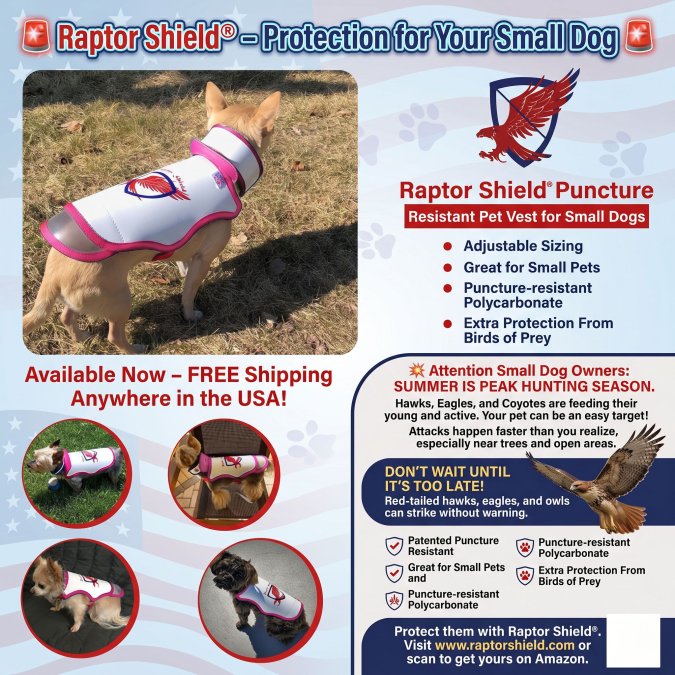
Small dogs face real predator threats, coyotes, hawks, and other birds of prey see them as prey.
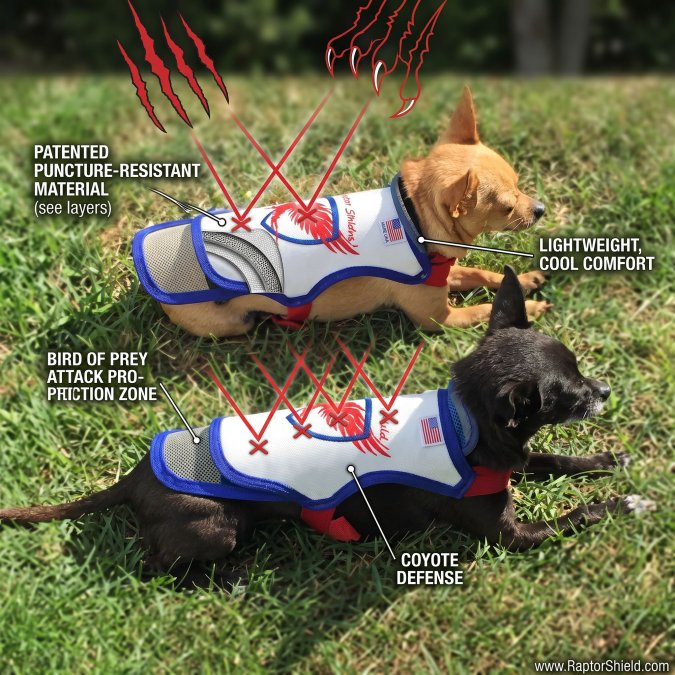
The Raptor Shield Vest uses patented puncture-resistant protection designed specifically for small dogs.
Rain doesn't have to mean staying indoors.
DON'T WAIT FOR THE CLOSE CALL. Raptor Shield, Helping protect small dogs when every second counts.
Visit www.RaptorShield.com, order on Amazon, or buy now with our secure checkout: https://www.paypal.com/ncp/payment/S4N7YYEXH8Q8C / https://www.amazon.com
Frequently Asked Questions
Are protective vests waterproof or water-resistant?
Most protective vests designed for predator defense are water-resistant rather than fully waterproof. They shed light rain and moisture to some degree, but prolonged soaking can allow water to seep through. The talon-proof materials used in protective vests like the Raptor Shield line are engineered to withstand puncture and tear, not necessarily full water immersion. For extended wet-weather protection, layering a water-resistant raincoat over a protective vest is an option, though fit and comfort must be carefully assessed.
Can a dog wear a protective vest under a raincoat?
Yes, dogs can wear a protective vest under a raincoat in theory, but it requires careful fit assessment. Layering adds bulk and can restrict movement or cause discomfort, especially for small dogs. The combined weight and snugness may stress an anxious dog or prevent proper running and playing. Always check that both garments fit correctly without pinching, and monitor your dog closely for signs of overheating or distress. Start with short outdoor sessions to gauge your dog's tolerance before longer rainy walks.
How do I keep my dog comfortable in a wet protective vest?
Comfort in a wet vest depends on fit, duration, and drying time. Ensure the vest fits snugly without gaps or excessive looseness, which can trap moisture. Limit rainy outdoor time to prevent prolonged water contact against the skin. After a wet walk, remove the vest promptly and dry your dog's coat and the vest itself. Check for any skin irritation or dampness in skin folds, especially around the chest, armpits, and neck. Lightweight, spike-free designs like the Raptor Shield Vest are built for comfort during movement, helping your dog forget it's wearing protection.
Should I remove my dog's vest after a rainy walk?
Yes, remove your dog's protective vest as soon as you come indoors after a rainy walk. Leaving a wet or damp vest on your dog's skin for extended periods increases the risk of moisture-related skin irritation and infection. Dry your dog thoroughly with a towel, paying attention to areas under the vest where moisture collects. Hang the vest to air-dry in a well-ventilated space away from direct heat. Allow your dog's coat to dry completely before putting the vest back on for the next outdoor adventure.
Small dogs deserve outdoor adventures without fear. Raptor Shield vests give your pup that freedom. With patented puncture-resistant protection and lightweight design, your dog can run, play, and explore while staying safe from aerial and ground predators. Get started with Raptor Shield and give your small dog the protection that matters.