
Table of Contents
- What Makes a Protective Dog Vest Lightweight and Effective
- Top Picks: Raptor Shield Vests by Size
- Coyote Vest for Dogs: How Puncture-Resistant Gear Works
- Dog Vest Fit and Sizing: Getting the Right Measurements
- Dog Vest Materials and Breathability for All-Day Wear
- Protection Limitations and Safety Guidance
- Conclusion: Choosing the Best Lightweight Protective Dog Vest
- Frequently Asked Questions
Last Updated: October 14, 2026
What Makes a Protective Dog Vest Lightweight and Effective
The best lightweight protective dog vest balances three things: coverage over vital areas, freedom of movement, and a weight your dog forgets within minutes.
At Raptor Shield, we have spent eleven years building gear for exactly this problem.
"Lightweight" is a fit decision, not a marketing word.
Protective dog vest sizing is the single biggest factor in whether the gear actually works.
AVMA guidance on keeping pets safe from wildlife
Top Picks: Raptor Shield Vests by Size
Our top pick for most small dogs is the Raptor Shield Vest, available in four sizes covering dogs from 2 to 21 pounds.
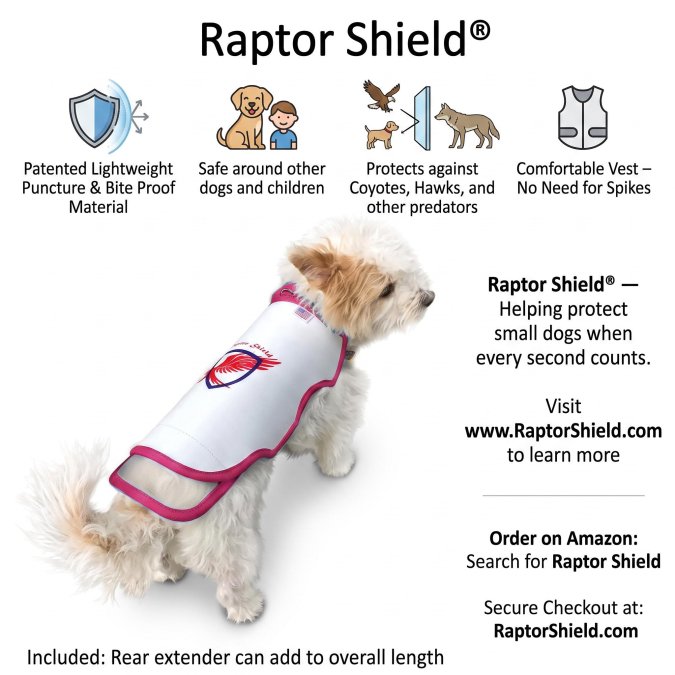
Measure your dog's chest at its widest point, just behind the front legs, then match that number to the size chart below.
| Size | Dog Weight | Chest Measurement | Price |
|---|---|---|---|
| Extra Small | 2-3 lbs | 7.5-10.5 in | $77.50 |
| Small | 4-6.5 lbs | 10.5-13.5 in | $81.50 |
| Medium | 7-11.5 lbs | 13.5-17 in | $81.50 |
| Large | 12-21 lbs | 17.5-23 in | $81.50 |
Extra Small (2-3 lbs)
The extra-small vest fits the tiniest dogs, including puppies and toy breeds, covering the back and shoulders without bulk that would overwhelm a 2-pound frame.
Small (4-6.5 lbs)
Small suits breeds like Yorkies and Chihuahuas at the lighter end. The harness-style support keeps the vest from shifting when your dog runs.
Medium (7-11.5 lbs)
Medium is our most common fit, covering most adult small breeds while allowing full range of motion during off-leash play.
Large (12-21 lbs)
Large fits bigger small dogs with the same back coverage as smaller sizes. If your dog measures near the top of the range, size up rather than down.
Every size comes in pink or blue, and buying two or more takes $10 off. Free shipping is included anywhere in the USA.
Coyote Vest for Dogs: How Puncture-Resistant Gear Works
A coyote vest for dogs places a puncture-resistant layer over the back, shoulders, and neck, the areas a predator grabs first.
That word "time" matters more than any strength claim.
The material in a Raptor Shield vest is similar to what goes into bulletproof glass, built to absorb and spread a focused strike rather than letting it pass through.
One verified account stands out: a dog wearing one of our vests came through a coyote attack safe and clean. That is the outcome the gear is built for.
USDA Wildlife Services information on coyote behavior
Dog Vest Fit and Sizing: Getting the Right Measurements
Dog vest fit and sizing comes down to one number: chest circumference.
Then check the weight range for that size. If your dog sits between two sizes, choose the larger one: a vest that is too small restricts breathing and movement.
- Chest first: the tape should sit flat against the coat with no slack
- Weight second: use it as a cross-check, not the primary measure
- Adjustable straps: tighten until the vest stays put when your dog shakes
A common mistake is buying for the weight on the food bag rather than the actual chest measurement. Those numbers often disagree, and the chest decides comfort.
Dog Vest Materials and Breathability for All-Day Wear
Dog vest materials and breathability determine whether your dog tolerates the gear for a full afternoon. A vest that traps heat becomes one your dog fights to remove, no matter how well it protects.
Protective dog vests generally fall into four material families, each behaving differently against heat and moisture:
- Woven puncture-resistant fabric (tightly woven aramid-style layers): strong against focused pressure, but the weave itself does not breathe, so airflow has to come from the cut and the lining.
- Laminated or coated panels: water-resistant and easy to wipe clean, but coatings cut vapor transfer, which is why they are usually reserved for the back panel rather than the chest wrap.
- Mesh and spacer fabrics: excellent airflow and light weight, but on their own they offer little puncture resistance and are typically used as the body of the vest around reinforced panels.
The shell on a Raptor Shield vest is lightweight by design, built for running and playing rather than standing still. The protective layer sits over the back, shoulders, and neck, while the harness cut leaves the chest and belly open to airflow.
How long is too long?
There is no single safe wear duration; it depends on temperature, humidity, your dog's coat, and activity level. A practical approach:
- Mild weather, light activity: most small dogs tolerate a vest for a normal walk or play session without issue.
- Warm weather or hard running: check your dog every 15 to 20 minutes and remove the vest during rest breaks.
- Above roughly 85°F, or high humidity: shorten sessions, stick to shade or early morning, and treat the vest as a short-duration layer rather than all-day wear.
For all-day wear, watch for these signals:
- Panting that does not settle after a few minutes of rest
- Reluctance to move or lying down more than usual
- Pawing at the straps or trying to roll the vest off
If you see any of these, take the vest off, move your dog to shade, offer water, and let them cool down before checking the fit again. Breathability and fit are linked: a vest that sits too tight traps more heat and rubs more.
Chafing, drying, and daily care
Heat is only half the comfort equation. Moisture is the other half.
- Dry the vest after every wet outing. A soaked panel loses loft, adds weight, and holds heat against the skin.
- Check the armpits and the front of the chest after each wear. Those are the first places friction shows up.
- Rinse and air-dry, do not machine-dry. High heat can degrade protective layers and shrink webbing.
A dog that is comfortable in the gear will forget it is wearing it. Breathability, fit, and dryness get you there.
ASPCA hot weather safety tips for dogs
Protection Limitations and Safety Guidance
No protective vest guarantees safety against a predator attack. We would rather say that plainly than let you assume otherwise.
What a puncture-resistant vest can and cannot do
A vest limits exposure and buys time; it does not replace supervision. Keep your dog close, stay outside with them, and treat the vest as one layer of defense alongside a secure yard and your presence.
- Can do: cover the back, shoulders, and neck, the areas a predator grabs first; resist focused pressure from teeth and talons long enough to create a window to intervene; stay spike-free so it is safe around children and other pets.
- Cannot do: stop a determined large predator outright; protect the face, throat, legs, or belly, which remain exposed by design so your dog can move; replace fencing, lighting, or your presence; protect against vehicles, traps, or falls.
- Not designed for: ballistic protection, flotation, or weatherproofing. If your dog swims or boats with you, a flotation vest is a different product with a different purpose, and the two should not be confused.
That word "time" matters more than any strength claim. The material in a Raptor Shield vest is similar to what goes into bulletproof glass.
One verified account stands out to us: a dog wearing one of our vests came through a coyote attack safe and clean.
Fit for different body shapes
A vest that fits a deep-chested dog hangs loose on a narrow one, and a vest cut for a short-legged breed can ride up on a longer-backed dog. Match the cut to the body:
- Deep-chested (Dachshunds, Whippets): measure at the deepest point of the ribcage and check that the back panel does not bridge across the spine.
- Broad-chested (French Bulldogs, Boston Terriers): size to the chest, not the neck, and confirm the straps clear the armpits.
- Narrow or slender (Chihuahuas, Italian Greyhounds): expect to tighten the straps near the end of their range, and re-check after the first few wears as the webbing settles.
Run this fit check every time you put the vest on:
- Two fingers should slide flat under every strap.
- The vest should not shift more than about an inch when your dog shakes.
- Your dog should be able to sit, lie down, and turn without the panel catching.
Inspection and replacement
Protective material degrades quietly. Check the vest before each use:
- Seams and stitching: look for pulled threads, fraying, or gaps where panels meet.
- Panels: feel for soft spots, delamination, or punctures that did not fully penetrate.
- Straps and buckles: confirm they still hold tension and that hook-and-loop closures still grip.
- After any incident: retire the vest. A panel that has absorbed a strike may look intact and still be compromised.
Replace damaged gear rather than repairing it yourself. A home repair can create a hard point or a gap, and either one defeats the purpose.
- Always supervise outdoor time, even with the vest on
- Keep your dog close rather than letting them range far
- Pair the vest with fencing and lighting that reduce predator access
If your dog has a known predator problem in the area, the vest is part of a plan, not the whole plan.
USDA Wildlife Services information on coyote behavior
Conclusion: Choosing the Best Lightweight Protective Dog Vest
Choosing the best lightweight protective dog vest comes down to fit, coverage, and honest expectations. Measure the chest, match the size, and understand the gear buys time rather than promising a guarantee.
Raptor Shield builds our vests for exactly that purpose.
Don't wait for the close call. Protect your small dog with a vest built for the moment that matters.
Frequently Asked Questions
What is the best lightweight protective vest for a small dog?
The best lightweight protective dog vest for a small dog depends on weight and chest size. Raptor Shield offers four sizes: Extra Small (2-3 lbs), Small (4-6.5 lbs), Medium (7-11.5 lbs), and Large (12-21 lbs). Each vest features a spike-free, harness-style design that allows full range of motion. Measure your dog's chest girth and weight before choosing a size to ensure a secure, comfortable fit.
Do coyote-protection vests for dogs actually work?
Coyote vests for dogs are designed to provide a layer of puncture-resistant protection, giving your dog a window of time during an attack. Raptor Shield uses patented talon-proof materials similar to those used in bulletproof glass. One customer reported their dog wore a Raptor Shield vest during a coyote attack and came out safe. No vest can guarantee complete safety, so always supervise your dog outdoors and keep them close.
How should a protective vest fit a dog?
A protective dog vest should fit snugly without restricting movement. Measure your dog's chest girth at the widest point behind the front legs, then match it to the size chart. Raptor Shield vests use adjustable straps for a telescoping fit. You should be able to fit two fingers between the vest and your dog's body. Check for rubbing or chafing after the first few wears.
Can a dog wear a protective vest all day?
A lightweight protective dog vest can be worn for extended periods, but it should not replace supervision. Raptor Shield vests are designed for comfort during running and playing, with breathable materials and a spike-free design. For all-day wear, check for overheating, especially in warm weather. Remove the vest during rest periods and inspect for wear or damage after each use.
Is a protective vest a substitute for supervision or fencing?
No. A protective dog vest is one layer of defense, not a replacement for supervision or secure fencing. Raptor Shield vests are designed to provide added back coverage and a window of time during a predator encounter. Always supervise your dog outdoors, keep them close, and maintain secure fencing. Predators are unpredictable, and no protective gear can guarantee safety against an attack.
Razor-sharp talons meet Raptor Shield®. Patented puncture-resistant protection for the dogs you love most. Visit www.RaptorShield.com, order on Amazon, or buy now with our secure checkout: https://www.paypal.com/ncp/payment/S4N7YYEXH8Q8C / https://www.amazon.com
Raptor Shield®, Helping protect small dogs when every second counts. Made In the USA.